Brain–Computer Interfaces and the Age of AI: When We Are Offered a 'Perfect' Virtual Life
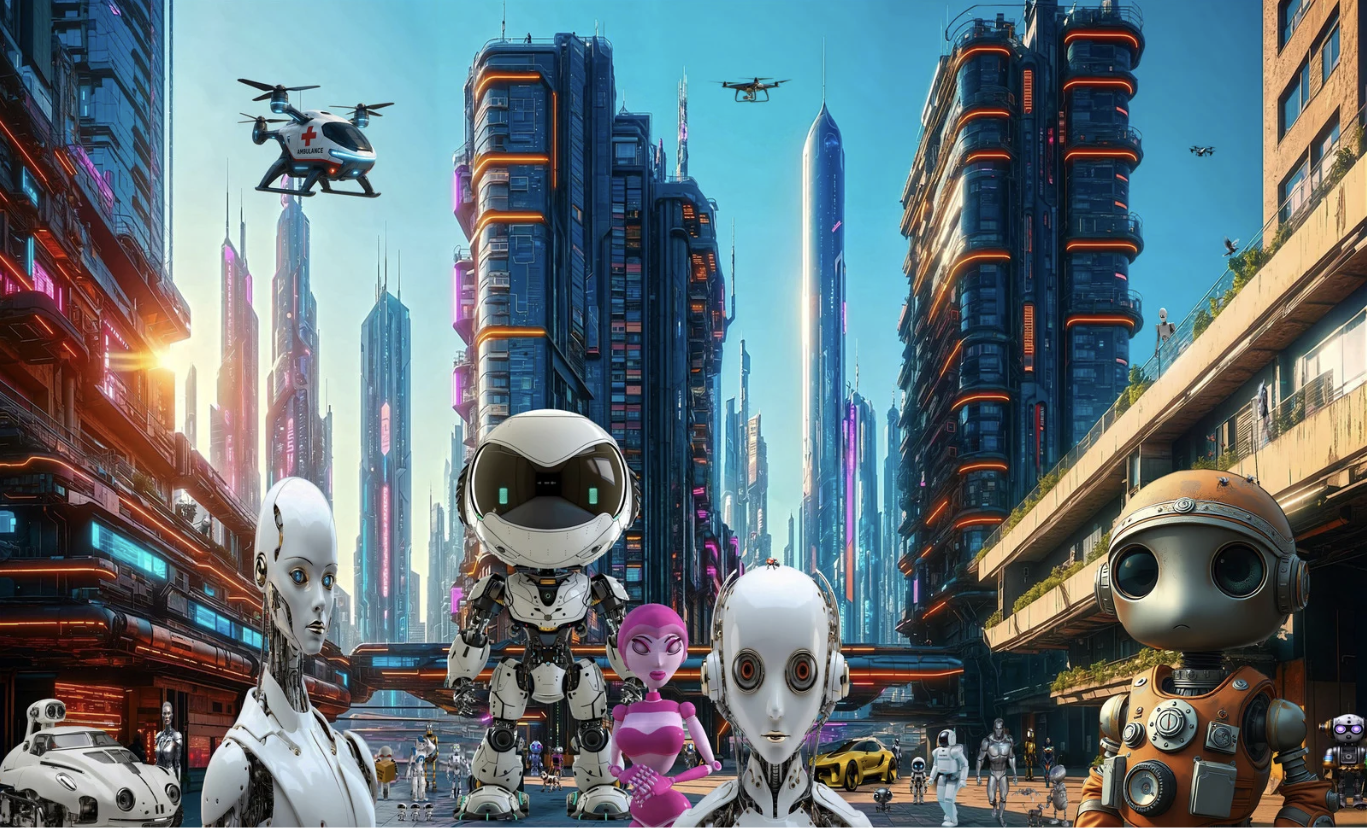
Recently, one of my students raised a thought-provoking, almost utopian idea: "If, in the future, brain–computer interfaces allow humans to experience life entirely in a virtual world, could that lead to perfectly equal resource distribution—and ultimately eliminate war and competition?"
I was first struck by the kindness behind this question—the desire to solve global inequality through technology. Yet alongside that admiration, it also led me to reflect more deeply.
I. The Meaning of the Body
This idea touches on a fundamental question: What is the role of the human body?
If humans were reduced to brains connected to cold interfaces, even if our consciousness could roam freely in a virtual world, would that still constitute a complete human life? The body is not merely a container for the mind—it is our primary way of experiencing the world. The warmth of an embrace, the quickening of a heartbeat, the subtle sensation of touch—these are dimensions of life that current digital technologies cannot fully replicate.
Without the body, would the mind become detached, even hollow? There is something undeniably unsettling—almost creepy—about that possibility.
II. A Life Written by Algorithms
Experiences in a virtual world would inevitably be built upon accumulated human history and data. This raises another important question: If life is designed, who is the designer?
A seemingly equal and harmonious digital utopia may, in reality, conceal a deeper layer of control.
- The loss of randomness: If everything is optimized by algorithms to be 'perfect,' the unexpected moments—the accidents, the spontaneous thoughts—may disappear.
- Who holds power in the virtual world? Those who control servers, maintain systems, and write code may effectively become the 'gods' of this reality. Rather than eliminating conflict, competition may shift toward control over the very foundations of consciousness.
III. The Weight of Human Experience
Personally, I believe life should be lived—fully and directly—through birth, aging, illness, joy, and hardship.
I do not seek a perfectly designed life. I long for real embraces and real breaths.
If everything can be instantly obtained in a virtual world, the sense of achievement may gradually fade. Food loses its appeal; reunions lose their emotional intensity. Nature, emotions—even suffering—become nothing more than lines of code.
Life is not about waiting for the storm to pass, but about learning to dance in the rain.
IV. Coexisting with AI
My student also asked: "If AI replaces humans, what will humans do?"
In response to this common anxiety, I believe: Rather than fearing replacement, we should learn how to coexist with AI—and rethink our own capabilities.
Some assume that with AI, learning is no longer necessary. This is a dangerous misconception. Without sufficient knowledge, humans cannot evaluate whether the information generated by large models is reliable. Without what I would call 'knowledge sovereignty,' we risk being passively shaped by algorithmically curated information.
- AI excels at providing answers. Humans excel at asking meaningful questions. The core competence of the future may lie not in knowing more, but in: critical thinking, the ability to ask better questions, and unique perspectives on the world.
- AI can assist with repetitive cognitive tasks, but it cannot fully replicate deep emotional connections or complex, cross-disciplinary judgment.
Conclusion
In an age of rapid technological advancement, the purpose of education may no longer be limited to the transmission of knowledge.
Instead, it may lie in guiding students to rediscover what it means to be human—within a world increasingly shaped by algorithms.
We should encourage students to use AI as a powerful 'external brain' to explore the unknown. But we must also remind them: In the pursuit of digital perfection, do not lose the authenticity of lived experience.